Translate

Showing posts with label queen of heaven. Show all posts

Friday, January 29, 2016

Marys and the light


Marys and the light

two ladies
with serpent coils.
rainbow patch visions
transposing my soul.

death and rebirth.
whirling energy
locked inside
a golden castle.

symbol and ritual.
ineffable love.
opened my heart,
revealed the light.

teacher, lover
queen of heaven.
magdala revelation
of the light within.

Friday, January 1, 2016

the migdal

A few blog posts back I hinted at revealing more of the secrets of the Book of Revelation that have been locked away for two thousand years. It is through my connection with the feminine divine and her graces of intelligence (nous) and wisdom (sophia) that I have understood the meanings of these riddles. Without these gifts from the Goddess, it would be futile to try and interpret the mysteries that lie within the mystery of this apocalyptic enigma.

I'd like to then highlight chapter 12 in the Book of Revelation and then reveal its source and from doing so it will lead us to further understand the identity of the dragon. First, I will go through and comment on each verse in the chapter.

Revelation 12 (King James Version)

   1 And there appeared a great wonder in heaven; a woman clothed with the sun, and the moon under her feet, and upon her head a crown of twelve stars:

St. John of Patmos sees a great vision of a woman in the heavens. There is mention of the sun and the moon. The twelve stars that make up her crown are the constellations of the zodiac. She is the Queen of Heaven.


A great wonder in heaven

   2 And she being with child cried, travailing in birth, and pained to be delivered.

The Queen of Heaven is about to give birth.

   3 And there appeared another wonder in heaven; and behold a great red dragon, having seven heads and ten horns, and seven crowns upon his heads.

Red is from the Greek 'purrhos' and means fiery red, so a great flaming red dragon appeared in the sky.


Great red dragon - Woodcut from Luther Bible 1534

In the following chapter 13 in the Book of Revelation the first beast that rises up out of the sea has seven heads, ten horns, and ten crowns around the horns as opposed to seven crowns on the seven heads. Though these fantastical creatures are related to each other, they are distinctly different.

   4 And his tail drew the third part of the stars of heaven, and did cast them to the earth: and the dragon stood before the woman which was ready to be delivered, for to devour her child as soon as it was born.

The tail of the dragon scatters a third of the stars in heaven to earth and then waits to devour the child immediately after delivery. The Greek word 'gune' is used in this verse for woman as it has the connotation of wife. It seems to be establishing a relationship between the dragon and the Queen of Heaven. This first brings to mind the story of the Titan Cronus/Saturn in Greek/Roman mythology who devours his children to prevent them from usurping him.


Peter Paul Rubens - Saturn Devouring His Son (detail) (1636)

Another interesting angle of this verse is the casting down of the stars to earth. I interpret this as the march of time that results in the disappearance of stars below the horizon and in conjunction with this I believe the stars here are symbolizing mankind as the progeny of the Queen of Heaven. This will become clearer later on.

   5 And she brought forth a man child, who was to rule all nations with a rod of iron: and her child was caught up unto God, and to his throne.

This verse gives us an idea of the identity of the child. Child is translated from the Greek 'huios' which in the synoptic gospels is often translated Son as in 'Son of man' hence why this newborn is curiously called a 'man child'. With this imagery and the rehabilitation of the translation to refer to Son of man we can now see the Queen of Heaven is to give birth to a cosmic Christ principle. This spiritual principle is being shown as having a birth in the heavens along with the more referenced birth of Jesus from a virgin in the synoptic gospels. Further to this it is representative of the axiom that what happens in the heavens also occurs on earth. This motif is what is used by the writer to connect this imagery back to the Old Testament.

   6 And the woman fled into the wilderness, where she hath a place prepared of God, that they should feed her there a thousand two hundred and threescore days.

This verse contains the puzzling reference to 1260 days which occurs earlier in the Book of Revelation. My take on it is that it shouldn't be taken literally as an amount of days but instead as a symbolic herald of a multiple of time to pass before its reappearance in the story. In this respect then this would seem to be pointing towards the precession of the equinoxes which is about double that amount x 10. The dragon representing time, turns the heavens and the zodiacal signs change from heaven based signs to earth and water signs which would correspond to half the amount of the full precessional cycle. This is why the stars are cast down and the Queen of Heaven finds herself on earth and is forced to retreat into the wilderness in hiding for this length of time until the zodiac wheel turns sufficiently to allow for an ascension back up into the heavens. Additionally, the 1260 could refer to three and a half years which would be hinting at a resurrection of some sort as we see in the behaviour of the birth of the new moon or the sun's rebirth after three days of figurative death at the winter solstice. This also ties in with the cyclical procession of the zodiac constellations and the events they cause to occur and reoccur and the 1260 days represents this change and reascension of the wisdom principle.

   7 And there was war in heaven: Michael and his angels fought against the dragon; and the dragon fought and his angels,

These events then precipitate a mighty battle between the martial archangel Michael and the dragon.

   8 And prevailed not; neither was their place found any more in heaven.

The dragon lost the great battle in the heavens. Perhaps an attempt to transgress the laws of time and stay in heaven?

   9 And the great dragon was cast out, that old serpent, called the Devil, and Satan, which deceiveth the whole world: he was cast out into the earth, and his angels were cast out with him.

Unfortunately for mankind the dragon and his angels get tossed down onto the earth. Here the dragon is definitively identified with the Devil who is called Satan.


The dragon is cast to earth

   10 And I heard a loud voice saying in heaven, Now is come salvation, and strength, and the kingdom of our God, and the power of his Christ: for the accuser of our brethren is cast down, which accused them before our God day and night.

This Satan character was not well liked in heaven. The language used here is the more familiar appeal to Salvationist Christianity. 

   11 And they overcame him by the blood of the Lamb, and by the word of their testimony; and they loved not their lives unto the death.

These last two verses go out of their way to conflate the imagery of Christ with the victors remaining in heaven. The use of words and phrases like 'salvation', 'kingdom of our God', and 'blood of the Lamb' appeal to the orthodox Christian ideal of Jesus as the saviour of mankind.

   12 Therefore rejoice, ye heavens, and ye that dwell in them. Woe to the inhabiters of the earth and of the sea! for the devil is come down unto you, having great wrath, because he knoweth that he hath but a short time.

There is the cyclical progression of time at work here. Those in the heavens rejoice while those of the earth should be wary of the wrathful one.

   13 And when the dragon saw that he was cast unto the earth, he persecuted the woman which brought forth the man child.

Persecuted in this sense means pursue so the dragon is chasing the Queen of Heaven.

   14 And to the woman were given two wings of a great eagle, that she might fly into the wilderness, into her place, where she is nourished for a time, and times, and half a time, from the face of the serpent.

The fleeing woman goes deeper into the wilderness thanks to two wings of an eagle. The time, and times, and half a time refers to the mysterious 1260 days. At this point we should consider that the entrance of this woman onto the earth and her hiding away is referring to wisdom, known as Sophia in Greek. This wisdom is hidden, protected, and nourished from the clutches of the Devil. The eagle wings are a bit of a mystery. I believe the writer here was using the zodiac as a guide to advance his story. The Queen of Heaven appears in the heavens in her time as Virgo and after that would be a fall to earth of sorts represented by Libra at the autumnal equinox. Following Libra is Scorpio which maintains a connection to the eagle as one of its symbols.

   15 And the serpent cast out of his mouth water as a flood after the woman, that he might cause her to be carried away of the flood.

The dragon in his fury floods the earth in order to try and drown this wisdom. Water comes from the Greek word hudor which refers to rainwater. As well in keeping with the zodiacal theme, the water signs follow the earth signs giving credence to the idea that the zodiac is being used as a storytelling device. The dragon can then be thought of as a controller of the zodiac's movement through the force of time.

   16 And the earth helped the woman, and the earth opened her mouth, and swallowed up the flood which the dragon cast out of his mouth.


The earth, the Greek 'Ge,' Gaia, helps her sister out by swallowing up the waters unleashed by the dragon and subsequently abates the flood.

   17 And the dragon was wroth with the woman, and went to make war with the remnant of her seed, which keep the commandments of God, and have the testimony of Jesus Christ.

The dragon vows to take out his anger on the righteous children of Sophia, who is wisdom.

In chapter 12 from the Book of Revelation the ideas that I want you to take from it are first the appearance of the woman in the heavens, second the scattering of the stars by the dragon's tail, and third the flood that was the result of the anger that the dragon felt towards the woman. What I'm going to show you is how these connect to Old Testament stories of Yahweh and his attempts at destroying the seeds of wisdom that keep re-emerging. The Gnostics of the time of the writing of the Book of Revelation considered the Old Testament god Yahweh the 'demiurge' - the false god and demented creator of the physical world who imprisoned the spark of the light that is resident in the human condition. It is my contention that Gnostic sects that had different views of these Genesis stories somehow disguised these retorts into the Book of Revelation by cloaking them in phrases that were acceptable to the orthodox faction of Christianity so that they would include this Book in their canon of acceptable material. It would be tempting for sure to want to include a Christian apocalypse modelled along the lines of Jewish apocalyptic literature that would provide a vision of the victorious followers of Christ and the coming of a new Jerusalem however lying in wait in this literature is a Trojan Horse that will eventually spell the doom for the orthodox Christian victors whom the Gnostics were trying to warn future humanity against. Reading between the lines we see the Gnostics hiding this wisdom away in the wilderness while the wrath of the dragon is directed at them and will eventually culminate in their annihilation by the dragon and his accomplices.

Now, I'm going to direct you to where these ideas came from in the Old Testament. The Gnostics, being very knowledgeable of these texts, cast Yahweh in the role of the dragon in the Book of Revelation and we will see in the Old Testament text Yahweh as 'God' who is similarly displeased and angered at humanity. I'll start with the woman in the heavens and scattering of the stars motif and direct you to Genesis 11. I will go through the first nine verses of this chapter and comment on them so we have a base and perspective to go on and then I'll comment on its meaning at the conclusion.

Genesis 11 (King James Version)

   1 And the whole earth was of one language, and of one speech.

This verse follows the recounting of the genealogy of Noah and the generations of his three sons following the ark and flood narrative. Being of one language and speech gives the idea of mankind united and in this condition knowledge and wisdom increases exponentially.

   2 And it came to pass, as they journeyed from the east, that they found a plain in the land of Shinar; and they dwelt there.

Shinar is a plain in Babylonia and sets the stage for what is to come.

   3 And they said one to another, Go to, let us make brick, and burn them throughly. And they had brick for stone, and slime had they for morter.

From this verse the important take away is the 'make brick' as examining the original Hebrew suggests the translation should be 'make white brick', the white hinting at creating something symbolically luminous.

   4 And they said, Go to, let us build us a city and a tower, whose top may reach unto heaven; and let us make us a name, lest we be scattered abroad upon the face of the whole earth.

A tower in Hebrew is called a 'migdal' which of course brings to mind the migdalah whom in the Hebrew Talmud is referred to as a hairdresser - "hamegadela se'ar nasha", "Miriam the plaiter of women's hair" (Hagigah 4b; cf. Shabbat 104b). This idea finds its flowering in the character of Mary Magdalene in the New Testament gospels and in the 'heretical' Gospel of Phillip we find Christ kissing Mary Magdalene on the lips, a symbolic gesture of the initiates that transfers wisdom and knowledge between acolytes. The 'gdal' part of this word also means to twist in addition to the tower inference and the twisting aspect is where the hairdresser connection comes in. So you can now start to see the beginnings of a connection here with a feminine tower that is reaching up to the heavens. The other word of note here is 'top' which is from the Hebrew 'ro'sh' which also means 'head.' In essence the head of a woman is reaching up to the heavens.


Tower of Babel from Athanasius Kircher’s 1679 Latin book Turris Babel

   5 And the LORD came down to see the city and the tower, which the children of men builded.

Yahweh comes down to Shinar (the dragon appears from Revelation 12:3) to witness this activity which the 'Son of man' built which is translated 'children of men' and this translation steers people away from making a connection here. It's the spark of the Son of man in humanity that gives them the know how to build the wisdom tower.

   6 And the LORD said, Behold, the people is one, and they have all one language; and this they begin to do: and now nothing will be restrained from them, which they have imagined to do.

This passage presents to us the potential of mankind to build great things when united. Much like the fit Yahweh threw in the Garden of Eden after Eve tempted Adam with the fruit of the Knowledge of Good and Evil, it seems Yahweh is forever interfering in the progress of humanity.

   7 Go to, let us go down, and there confound their language, that they may not understand one another's speech.


Yahweh is truly the author and begetter of confusion.

   8 So the LORD scattered them abroad from thence upon the face of all the earth: and they left off to build the city.

Yahweh scatters mankind throughout the earth. By dividing them up they ceased symbolically building a tower of wisdom and finished building the city. With these acts we can now establish the connection with Revelation 12.

   9 Therefore is the name of it called Babel; because the LORD did there confound the language of all the earth: and from thence did the LORD scatter them abroad upon the face of all the earth.

Babel which is Babylon, means confusion. It is the signature of Yahweh and where you find the confusion and ignorance of mankind from his true nature you'll find this god.

In these verses from Genesis 11, I have pointed out the tower known as a migdal which was made up of white brick that reached up to the heavens and the subsequent scattering of mankind. If we go back to Revelation 12 we see the woman that appears in the heavens and then a scattering of stars down to earth. This chapter in Revelation is designed by the writer as a prequel to the same actions that will then occur on earth as they did in the heavens. It is the Gnostic interpretation of the events and the role played by Yahweh identified as a fiery red dragon. The Gnostic author did this to craftily hide it away in the Book of Revelation so that one day it could be decoded. Here's how it the full story would be reconstructed in chronological order:
The woman as wisdom appears in heaven.
The dragon as Yahweh appears in the heavens intent on devouring her child.
The dragon scatters a third of the stars, the stars symbolizing the woman's seed, to earth.
The dragon is cast down to earth.
Genesis 11 continues the story with the location now on earth.
The stars as humanity come together as one to build a tower that represents the wisdom goddess who on earth becomes Mary Magdalene.
Yahweh comes down to see the tower. (Revelation 12 describes him being forcefully cast down.)
Yahweh scatters humanity.

By making this connection we can now proceed to the flood unleashed by the dragon in Revelation 12 and see how this was another event taken from the Old Testament, indicative of the rage of Yahweh, by the Gnostic author.

Here are the beginning verses of the flood story from Genesis 6 (King James Version):

   5 And GOD saw that the wickedness of man was great in the earth, and that every imagination of the thoughts of his heart was only evil continually.

This passage in establishing some sort of perverse justification that will allow Yahweh to drown mankind.

   6 And it repented the LORD that he had made man on the earth, and it grieved him at his heart.

   7 And the LORD said, I will destroy man whom I have created from the face of the earth; both man, and beast, and the creeping thing, and the fowls of the air; for it repenteth me that I have made them.

In order to make up for his 'mistake', Yahweh will double down and compound the problem with mass pre-meditated murder. And then a little farther down in chapter 6: 

   17 And, behold, I, even I, do bring a flood of waters upon the earth, to destroy all flesh, wherein is the breath of life, from under heaven; and every thing that is in the earth shall die.

Returning to Revelation 12, here are the verses once again that refer to the flood story:

   15 And the serpent cast out of his mouth water as a flood after the woman, that he might cause her to be carried away of the flood.

   16 And the earth helped the woman, and the earth opened her mouth, and swallowed up the flood which the dragon cast out of his mouth.

What we have here is the Gnostic version of the flood as perpetrated by Yahweh. He attempted to drown that spark of wisdom that when received allows mankind to reach its fullest potential which I believe spells the end for Yahweh and the yoke he has placed over humanity. In addition, going back to the scattering motif we can see now how it is possible for Yahweh to say that he created mankind as the rageful act of sweeping a third of the stars in the heavens to the earth is the supposed act of creation.

In the Book of Revelation time and time again we find connections to stories in the Old Testament that are inverted and told with a different point of view. Yahweh is identified as a dragon and the religious authorities and offshoots of his worship are designated as beasts. It's fascinating to go through the Book of Revelation in this manner and find the connections. It's a carefully constructed work that treads a fine line that remains true to the orthodox Christian conception of God and his sacrificed saviour son Jesus with references to touchstone ideas such as the blood of the lamb, bloody revenge on your enemies, and the dawning of a new Jerusalem but the real genius of this book is how it hid a separate storyline that implicates this dragon god, the fake Jesus, and the orthodox religions of Judaism and Christianity conspiring in a devious plot to subjugate and rule over mankind by denying them the wisdom that will allow mankind to progress into their spiritual destiny and heritage. The seals of this fabulous book are indeed becoming unlocked and wisdom is pouring out once again into the world. The time to reclaim our destiny from the dragon is now.

Sunday, December 18, 2011

scent of a woman

Hail to thee, Lady of Fragrance,
Great Sekhmet, Sovereign Lady
Worshiped one,
Serpent who is upon her father…
Your rays illumine the Two Lands,
The two Regions are beneath your sway.
 
Al Pacino's performance as Lieutenant Colonel Frank Slade in the movie "Scent of a Woman" is one of my favourites of all time. This blog entry will not be about the movie but instead will be about Hathor, the greatest goddess to come out of Egypt.

Until the Late Period Hathor was the only goddess to possess temples of her own throughout the country, with a major sanctuary as the goddess of the southern sycamore at Memphis.
Ancient Egyptian Religion, Stephen Quirke, page 126

I cannot do justice to Hathor in a blog entry so it is necessary to concentrate on an aspect of the great lady, and that aspect I wish to write about is the Lady of Fragrance. First let's examine the name Hathor and get a handle on its meaning. The ancient Egyptians called Hathor Hwt-Har. Hwt means house and Har is referring to Horus; Horus being the enlightened ba who is destined to become a glorious, imperishable, and transfigured soul. House of Horus could mean that Hathor represents the abode of Horus in the sky and as the Lady of Turquoise Hathor plays that role. However the Pharaoh of Egypt, known as the living Horus, is said to be the son of Hathor. As I've mentioned before Horus is also the son of Isis. Were the ancient Egyptians confused or did they have disparate beliefs that were melded into an official religion that then had to account for Horus having multiple mothers? I've read a few books by Egyptologists that say that is the case. However what does 'house' mean in this regard. We live in a house so sure it can mean a dwelling place but we also know from the royalty we studied in history class that house can mean a dynasty or a genealogy such as the "House of Windsor" or the "House of Saud". This meaning is rather enlightening then. Horus then becomes the offspring of the line of gods and goddesses of which Hathor is the matriarch.


Hathor, being the consort of Re, is responsible for the Ennead of Iunu (Heliopolis). Shu (air/light), Tefnut (moisture/heat), Geb (earth), Nut (sky), Osiris (Ba/soul) and then Isis (womb of the incarnated Ba/spiritual mother), who gives birth to Horus in the material plane, are the direct ancestors of Horus.

Are you Horus, son of Osiris? Are you the god, the eldest one, the son of Hathor? Are you the seed of Geb?
The Ancient Egyptian Pyramid Texts, R.O. Faulkner, Utterance 303, Paragraph 466

Hathor is the mother of the Ennead and therefore the great mother of the all important Horus. The ancient Egyptians rather than being confused about who was the mother of Horus, were in giving Horus two mothers, being clear of his origins. The confusion of Isis-Hathor is a product of modern scholars attempting to make sense of something for which they do not as of yet have a complete understanding. The same could be said about the Greeks and their propagation of a Hellenistic Isis that embodies all the attributes of the great goddesses of ancient Egypt.

With that out of the way, let's investigate my aromatic mistress! Hathor is present at all scenes of birth and death in ancient Egypt. To the ancient Egyptians there was no real death or finality in the way we would think of death. Death was a re-birth or a changing of state. The soul is entombed in matter in the west mirroring the sun's descent into the waters in the evening and the soul is re-born in the east as is the sun on the occasion of our material death in the west when we give up the ghost; ghost being our word for the ancient Egyptians' concept of the life force which they called ka.

The truth is seen by those who travel in the sun-boat through the gateways of the raging-beneficent goddess in the night. And it is seen by the ritualists in the temple when they extinguish their flames for the ancestral dead in the Ancestor Ritual and utter their great prayer of trust in the returning goddess. Glittering in the dawning sky, she is praised both by the living on earth and by those in the Dwat, the goddess who brings to birth a new world at dawn. A glorious moment of cosmic unity is experienced as these worlds of the living and the dead merge and meet in the ninth hour of the night.
It is important to realize that Hathor herself manifests differently in this crucial transition zone, depending on whether she is to be seen as a night or day goddess. From the perspective of those living on earth in the daytime cycle, she appears bearing the young sun child in her womb, nurturing his Ka-life in the secrecy of the eastern horizon. To those Bas making their night journey through the Dwat she appears as the celestial cow of the starry night heavens, the returning Eye goddess emerging from the Western mountain wearing her symbolic menit-necklace of attraction, the vital goddess of desire, through whom life is continually born anew at the close of the night.

My Heart My Mother, Death and Rebirth in Ancient Egypt, Alison Roberts, pages 182 to 184


The ancient Egyptians traded extensively with the semitic Phoenician city state of Byblos, known in those days as Gubla/Gebal. Today it is the city of Jubayl in modern Lebanon. The inhabitants of Byblos worshipped a goddess, Astarte, who they would refer to as Ba'alat which means Lady. This Queen of Heaven was the Phoenician Goddess of Love and Fertility and equated with the planet Venus. Venus and Aphrodite being of course Roman and Greek iterations of Hathor. A cylinder seal from Byblos shows Ba'alat with Hathor hair, wearing the headdress of Hathor as well. Other representations of Ba'alat show her with a uraeus on her forehead and in another she is said to be "beloved of Hathor".

The Hebrew word for frankincense is lebona, which means pure or white and describes both the visual attributes of frankincense as well as the area, white snow capped mountains of Lebanon, where it is grown. The resin that flows from the frankincense bush is milky white.

Since ancient times, frankincense resin has been used to manufacture incense, cosmetics, and perfumes. Arabian women still burn frankincense to perfume their bodies, in particular the vulva (Martinetz et al. 1989). This not only lends them a more pleasant scent but also is said to make them more erotic.
http://lucidconsciousness.com/psychotropia/?p=999

In the book of Jeremiah 44 (King James Version) we read Jeremiah commenting on the idolatrous practises of the cities of Judah in relation to our Queen of Heaven:

17 But we will certainly do whatsoever thing goes forth out of our own mouth, to burn incense unto the queen of heaven, and to pour out drink offerings unto her, as we have done, we, and our fathers, our kings, and our princes, in the cities of Judah, and in the streets of Jerusalem: for then had we plenty of food, and were well-off, and saw no evil.

Hathor would welcome the newly dead with food and drink, her role being one of an oasis in the hostile desert. There were also wild celebrations of food and drink at Hathor's Festival of Drunkenness that would occur shortly after the cyclical inundation of the Nile in mid-late summer.

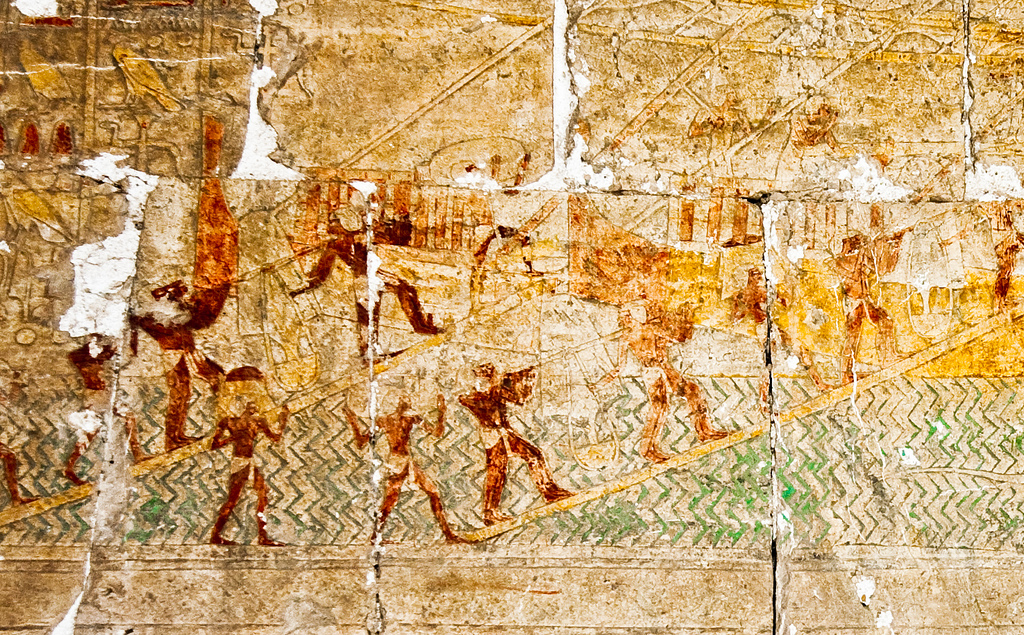
The Lady of Fragrance was also connected to the aromatic myrrh which was highly prized in ancient Egypt. Queen Hatshepsut pictorially presents to us at her temple in Deir el-Bahri an expedition to the land of Punt in year 9 of her reign to procure among other things myrrh, frankincense and gold that were pleasing to the Mistress of Punt, Hathor.


Hatshepsut's devotion to Hathor is shown in the chapel of Hathor at the site where she dances before Hathor as well as suckling an udder of Hathor.

"the best of myrrh is upon all her [Hatshepsut's] limbs, her fragrance is divine dew, her odour is mingled with that of Punt."
Ancient Records of Egypt, J.H. Breasted, Vol. 2, pg.274


The Online Etymological Dictionary gives the history of the word myrrh as such:

myrrh
Old English myrre, from Latin myrrha, from Greek myrrha, from a Semitic source (confer Akkadian murru, Hebrew mor, Arabic murr "myrrh"), from a root meaning "was bitter."
https://www.etymonline.com/word/myrrh#etymonline_v_19344

From this we can take the greek word "myrrha" and investigate its origin. Myrrha is a goddess also known in greek as Smyrna. She is the mother of Adonis, the result of an incestuous relationship with her father. Her father Cinyras was tricked by Myrrha into sexual intercourse and this enraged him. He pursues Myrrha intent on killing her until Myrrha petitions the gods to intervene. They turn her into a myrrh tree. The child Adonis would then eventually be slain by a wild boar, echoing the story of Osiris and Set (The ka killing the ba again.) The legend of Adonis harkens back to the Phoenician Adon, the son of Ba'alat. The theme of incest is also present in the kingship of ancient Egypt as the Pharaoh, who is the living Horus, must impregnate his mother Hathor as Kamutef, the bull of his mother, in order to engender his next incarnation as Pharaoh in the cyclical legitimacy of kingship.

The theme of incest that is connected here between Hathor and Myrrha reminds me of the story of Lot in the Bible - Genesis 19: 30-38. Lot is tricked by his two daughters who get him drunk one night and then are impregnated by their father in order to continue their bloodline. The justification would then be that the bloodline was too important to let perish so the act was condoned and tolerated. I'm more interested in the name Lot here. I've commented in this blog space before on the many inversions of ancient myths that are present in the Bible. This is another one of them. Easton's 1897 Bible Dictionary gives us this information concerning Myrrh:

Another word lot is also translated “myrrh” (Gen. 37:25; 43:11; Revised Version, marginal note, “or ladanum”). What was meant by this word is uncertain. It has been thought to be the chestnut, mastich, stacte, balsam, turpentine, pistachio nut, or the lotus. It is probably correctly rendered by the Latin word ladanum, the Arabic ladan, an aromatic juice of a shrub called the Cistus or rock rose, which has the same qualities, though in a slight degree, of opium, whence a decoction of opium is called laudanum. This plant was indigenous to Syria and Arabia.

Lot is translated from myrrh! There is also the claim that myrrh can also refer to the lotus. The Online Etymological Dictionary says this about the lotus:

lotus
1540s, from Latin lotus, from Greek lotos, name used for several plants before it came to mean Egyptian white lotus (a sense attested in English from 1580s); perhaps from a Semitic source (confer Hebrew lot "myrrh").
https://www.etymonline.com/search?q=lotus

There's the connection to lot again. Why stop now, let's look up the name Lot from some trusted Bible sources:

Hitchcock's Bible Names Dictionary
Lot
Lotan, wrapt up; hidden; covered; myrrh; rosin

King James Dictionary
Lot
Portion; destiny; fate.The LORD is the portion of mine inheritance and of my cup: thou maintainest my LOT. (Psalm 16:5)

Hitchcock's dictionary gives us the myrrh connection again and the King James dictionary gives us an interesting definition of the name connecting it to fate and destiny.

In ancient Egypt it was said that whenever a child was born the seven Hathors would be present to announce the fate of the child. It was believed that these ladies could exchange a prince born to ill-fortune with a child with a better fated outlook on life.

One other epithet of Hathor I'd like to mention now is "The Golden One".

Much farther north in Middle Egypt, and thus closer to the royal capital at Memphis, was the town of Kusae, where Hathor was the chief deity as Lady of Kusae, at least from the early Middle Kingdom. The great tombs belonging to local princes at Meir testify to their devotion to this goddess, who was also referred to there by a priestess's text as The Gold.
The Great Goddesses of Egypt, Barbara S. Lesko, page 96

In a private tomb from the reign of Thutmose III, the owner praises Hathor as the very sun itself: "When you rise you come in peace. One is drunken because of your beautiful face, O Gold, O Hathor!"
The Great Goddesses of Egypt, Barbara S. Lesko, page 109

You may have guessed now why I've included the veneration of Hathor as "The Gold" along with her fragrant attributes. It is getting close to Christmas and the celebration of the birth of Christ. I had mentioned earlier that Hathor is present at all scenes of birth and death and this is one birth the Great Lady wouldn't miss for the world. The story goes that the wise men bring their gifts of gold, frankincense and myrrh. Now we know what the real symbolism is behind these gifts.

We are a week away from Christmas so why stop now? Let's look at chapter 2, verse 1 to 11 of the Book of Matthew (King James Version):

1 Now when Jesus was born in Bethlehem of Judaea in the days of Herod the king, behold, there came wise men from the east to Jerusalem,
2 Saying, Where is he that is born King of the Jews? for we have seen his star in the east, and are come to worship him.
3 When Herod the king had heard these things, he was troubled, and all Jerusalem with him.
4 And when he had gathered all the chief priests and scribes of the people together, he demanded of them where Christ should be born.
5 And they said unto him, In Bethlehem of Judaea: for thus it is written by the prophet,
6 And thou Bethlehem, in the land of Juda, art not the least among the princes of Juda: for out of thee shall come a Governor, that shall rule my people Israel.
7 Then Herod, when he had privily called the wise men, enquired of them diligently what time the star appeared.
8 And he sent them to Bethlehem, and said, Go and search diligently for the young child; and when ye have found him, bring me word again, that I may come and worship him also.
9 When they had heard the king, they departed; and, lo, the star, which they saw in the east, went before them, till it came and stood over where the young child was.
10 When they saw the star, they rejoiced with exceeding great joy.
11 And when they were come into the house, they saw the young child with Mary his mother, and fell down, and worshipped him: and when they had opened their treasures, they presented unto him gifts; gold, and frankincense and myrrh.

Now, it says in verse one that these wise men came from the east with the speculation being they may have been Persian Magi. In any event they are from the east. Verse two says they saw a star in the east announcing the saviour's birth. Tradition has it that they followed the star as the famous song written in 1857 by Rev. John Henry Hopkins relates:

We three kings of Orient are
Bearing gifts we traverse afar
Field and fountain, moor and mountain
Following yonder star

O Star of wonder, star of night
Star with royal beauty bright
Westward leading, still proceeding
Guide us to thy Perfect Light

Born a King on Bethlehem's plain
Gold I bring to crown Him again
King forever, ceasing never
Over us all to reign

O Star of wonder, star of night
Star with royal beauty bright
Westward leading, still proceeding
Guide us to Thy perfect light

Frankincense to offer have I
Incense owns a Deity nigh
Prayer and praising, all men raising
Worship Him, God most high

O Star of wonder, star of night
Star with royal beauty bright
Westward leading, still proceeding
Guide us to Thy perfect light

Myrrh is mine, its bitter perfume
Breathes of life of gathering gloom
Sorrowing, sighing, bleeding, dying
Sealed in the stone-cold tomb

O Star of wonder, star of night
Star with royal beauty bright
Westward leading, still proceeding
Guide us to Thy perfect light

Glorious now behold Him arise
King and God and Sacrifice
Alleluia, Alleluia
Earth to heav'n replies

O Star of wonder, star of night
Star with royal beauty bright
Westward leading, still proceeding
Guide us to Thy perfect light


However, following a star in the east would not lead you west unless you are following the star from the moment it rises in the east until it sets in the west and is directly overhead - from which you would get an awful crick in your neck halfway through your journey. If you are following a bright star such as Sirius you would be heading southeast at first and then eventually south and then southwest by your orientation to the star. A more plausible explanation is that this 'star' they are following is the planet Venus. Venus is our royal lady Hathor who will be visible in the west after the sun sets in the evening and then is visible in the east shortly before the sun rises in the morning. Except for the moon, Venus is by far the brightest object in the night sky and it is a star of royal beauty bright. Venus will guide you westward at night and then direct you towards the reborn sun in the east in the morning, "thy perfect(ed) light". Hathor is the announcer of the birth in the morning of the sun as I wrote in this blog entry. In Matthew 2:5 we learn of the prophecy being fulfilled of the messiah being born in Bethlehem and explains why the Magi are heading to that town. Bethlehem means House of Bread. Curiously the ennead in Egypt located in Iunu (Heliopolis of the Greeks and On of the Bible) of which Hathor is the matriarch, was also known in ancient times as a major storehouse of grain, i.e. the place of bread. The result of the ennead of Iunu is the birth of Horus, our transfigured soul. The pharaoh was known as the living Horus and would be an object of worship and even Hathor would worship the living Horus. Here is a scene from Deir el-Bahri showing Hathor as the cow Mehet-Weret licking the hand of the pharaoh as a sign of reverence.


Of a similar nature is the portrait found several times in the sanctuary of Hathor at Deir el-Bahri which depicts Hathor as cow-goddess licking the queen's hand. This gesture can be interpreted either as a mark of favour or as a sign that the goddess recognizes the queen and wishes to give her power.
(Author cites E. Naville, The Temple of Deir el-Bahari, 1895, IV pl. LXXXVII, XCIV, XCVI.)
Hathor and Thoth, Two Key Figures of the Ancient Egyptian Religion, C.J. Bleeker, page 52


In Matthew 2:11 it is written that the wise men prior to giving Jesus their gifts of gold, frankincense and myrrh, worshipped him. What does worship mean in this case?

Strong's Concordance:
4352 proskuneo (pros-koo-neh'-o); from 4314 and a probable derivative of 2965 (meaning to kiss, like a dog licking his master's hand); to fawn or crouch to, i.e. (literally or figuratively) prostrate oneself in homage (do reverence to, adore): KJV-- worship.

The Magi in their travels along with their gifts and adulation of the king of kings give away who they really are representing. This Lady of Gold, Lady of Fragrance is the greatest goddess of all; without her we are nothing.